
Dermal Fillers
Dermal fillers are a popular cosmetic treatment for beautification and rejuvenation. They enhance facial features, restore volume loss, and fill in fine lines and wrinkles. Other than the forehead, dermal fillers can be used almost anywhere in the face, including the temples, cheeks, nasolabial (nose to mouth) and marionette (mouth to chin) lines, lips, jaw and chin.
Dermal fillers are most commonly composed of hyaluronic acid, which, when injected, attracts water to hydrate, plump, and add fullness to the area. This type of dermal filler is well tolerated by all individuals, as hyaluronic acid is native to the human body and is predominantly found in our skin, joints, and connective tissue.
To preserve their longevity, dermal fillers come in a gel-like formulation that is cross-linked to prevent the hyaluronic acid from being rapidly metabolised by the body. As a result, their effects can last anywhere from 6 to 18 months, depending on the individual and thickness of the filler used.
Prices for dermal fillers start at £250 for 1ml, and the treatment takes approximately 60 minutes. Downtime is minimal, and the final result is visible after four weeks.


FAQs
Dermal fillers can be used in the:
Please click each area above to find out more.
The ideal age to start using dermal fillers varies based on a person’s needs and aesthetic goals. Generally, people begin considering dermal fillers in their mid-thirties to forties when signs of ageing, such as fine lines, wrinkles, and volume loss, become more noticeable. However, clients also opt for fillers in their twenties to enhance facial features like their lips or cheekbones.
You may not be suitable for dermal fillers if:
- You are pregnant, breastfeeding, or undergoing IVF.
- You are under 18.
- You have diabetes, rheumatoid arthritis, autoimmune conditions, blood clotting disorders, cancer, or are immunosuppressed.
- You are taking medications that affect bleeding, like warfarin.
- You have an allergy to bee stings.
- You have had recent facial surgery, permanent implants, or dermal fillers in the same area you wish to be treated.
- Notify me if you are prone to cold sores.
- Reschedule if you are or have been unwell in the last two weeks.
- Reschedule if you have had a vaccination in the past two weeks.
- Do not plan to have the treatment six weeks before a big social event or holiday, as it will not leave enough time for the side effects to settle and for you to have a review appointment.
- Please arrive with a cleansed, make-up-free face to help avoid infection.
Before the treatment, you will be guaranteed a full consultation so we can listen to your concerns and goals, take a comprehensive medical history, assess your face, establish whether dermal fillers are the right treatment option for you, and develop a bespoke treatment plan together. We will discuss the risks and benefits of the procedure, and if you aren’t sure, we will insist you go away and take some time to decide if you want to proceed with the treatment.
No, we believe in creating subtle and natural results. We want you to appear refreshed and younger-looking without anyone noticing that you have had anything done. You can also trust us to say no if something you request is not in your best interest.
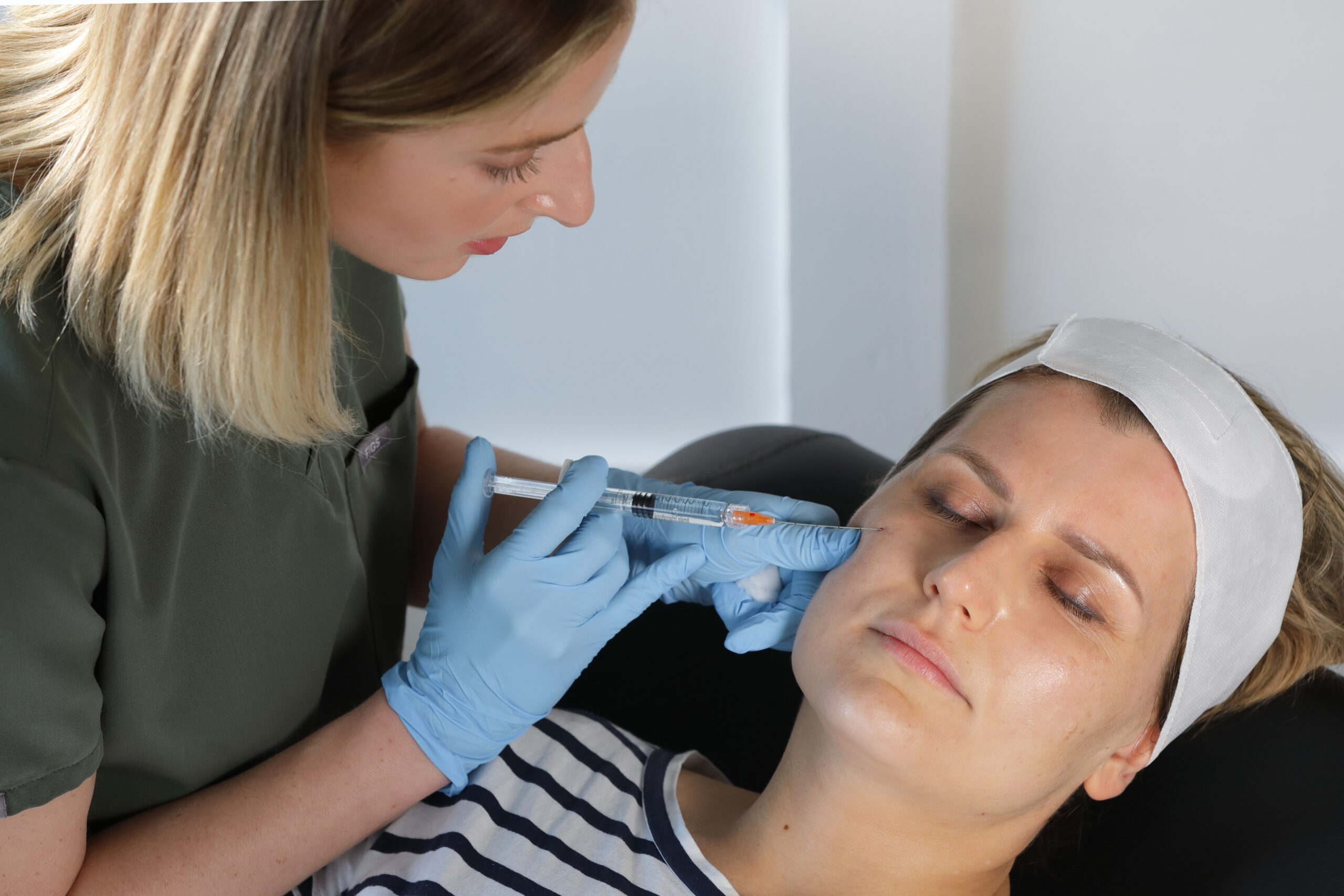
A cream will be applied to the skin 20 minutes before the start of the treatment to numb the targeted area. The filler also contains a local anaesthetic, which numbs the region when injected.
Injections are administered in the targeted area and massaged post.
Afterward, the area may feel tender, and sometimes swelling and bruising can occur. This improves over the next seven days and can be helped by applying cool pads and arnica cream.
After your treatment, you will be advised of the following:
- Avoid touching your skin, following your regular skincare regime, or applying makeup until 12 hours after your treatment to prevent infection.
- Avoid alcohol, extremes of heat or cold, and vigorous exercise until the swelling has settled down.
- If you experience any significant pain, altered sensation, or skin changes within 48 hours of your treatment, you must immediately contact the emergency number provided.